

Kenya PVOC Certification – (Certificate of Conformity – Pre-Shipment Inspection)

Kenya PVOC Certification – Pre-Export Verification of Conformity (Certificate of Conformity – Pre-Shipment Inspection)
The IDF is applied for in Kenya by the importer, i.e., the overseas consignee, and is used to apply for Kenya PVOC/COC clearance documents.
PVOC stands for Pre-shipment Verification of Conformity. It is also commonly referred to as COC certification, which stands for Certificate of Conformity, and is one of the customs clearance documents.
Kenya PVOC (Pre-export Verification of Conformity) is a conformity assessment program for products exported to Kenya. Since July 1, 2005, all products imported into Kenya must be accompanied by a qualified test report or certificate. This measure, introduced under WTO rules, replaces the former "Pre-shipment Inspection (PSI)" program. It aims to prevent unsafe and substandard goods from entering the Kenyan market. For goods that comply with PVOC requirements, a COC certificate is issued, which is a mandatory document for customs clearance at the Kenyan port of destination. Failure to provide these documents will result in the goods being subject to inspection at the destination port, incurring high costs and potentially causing delays. If the goods ultimately fail to comply, they will be denied entry and returned.
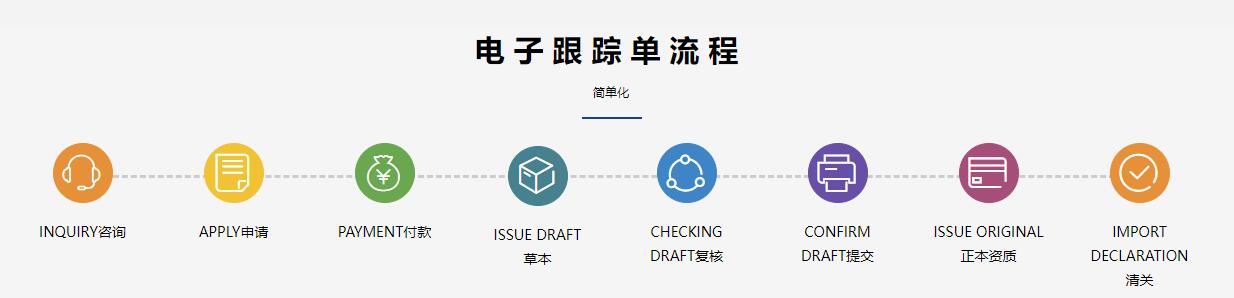
Kenya PVOC Certification Procedure
1. Determine whether the exported products require PVOC certification
All goods exported to Kenya (except exempted items) must obtain a COC certificate (Kenya COC certification, also known as PVOC certification). This certificate is a mandatory document for customs clearance at the Kenyan port of destination. (To confirm whether a product is exempt, please provide the product name and HS CODE for verification with our company.) Exempt products can be shipped directly without testing or inspection. However, please note that Kenyan authorities may still conduct destination port inspections under THE STANDARDS ACT CAP 496 LAWS OF KENYA.
2. Select the Kenya PVOC inspection route
There are three routes for Kenya PVoC inspection:
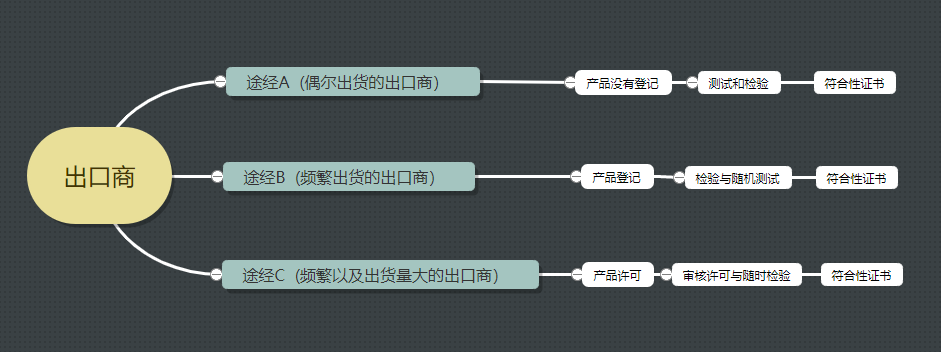
Route A: Consignment Certification (Product Testing and Inspection)
This route is primarily for exporters/manufacturers who ship to Kenya infrequently (generally no more than three times a year). Under this route, goods to be shipped to Kenya must undergo product performance testing (see Step 4) and on-site inspection before shipment to demonstrate conformity with relevant standards, basic product requirements, or manufacturer specifications (see Standard Selection – Step 2).
This route applies to any trading entity. The steps for shipment and product certification are as follows:
1. The exporter submits an inspection application form.
2. The submitted RFC and related documents are reviewed.
3. A designated inspector conducts the goods inspection.
4. Our company issues the final certificate document.
Route B: Product Registration and Shipment Certification
This route is mainly for exporters/manufacturers with frequent shipments and a relatively uniform product range.
Registration is valid for one year. Registered products are exempt from mandatory testing at the time of shipment, and the certification process involves only a basic on-site inspection. However, during the registration validity period, random testing of registered products may still be required to ensure ongoing conformity.
The following products cannot be registered under Route B (i.e., they are only suitable for consignment inspection under Route A):
1. Sugar
2. Grains and their processed products, such as rice, wheat, beans, corn, etc.
3. Fertilizers
4. Animal and aquatic products (fresh and frozen, not deeply processed)
5. Dairy products
6. Fresh horticultural products
7. Used and second-hand goods
Product Registration Process:
1. The exporter submits a "Registration Application Form" to our company.
2. The registration application is reviewed.
Operational Process for Applying for a COC for Registered Products
Registered products still require a Certificate of Conformity at the time of shipment to be allowed entry into Kenya. However, due to the registration, the corresponding certification process is faster. The procedure is as follows:
1. Submit a Request for Certification (RFC).
2. An inspector conducts an inspection of the shipped/exported goods.
3. Testing of the shipped/exported goods.
4. Our company issues the final certificate document.
Route C: Manufacturing Licensing (Product Licensing for Factories)
This route is suitable for factories with very large and highly frequent export volumes.
1. After obtaining product registration, if the shipped goods consistently meet requirements, the manufacturer can apply to our company for a License. The procedure involves evaluation of relevant test reports and, where possible, periodic random testing to verify that the manufacturer's products continuously comply with relevant Kenyan requirements. Additionally, our certification center will assess and monitor the factory's production facilities, quality control, etc., to ensure product quality. The entire licensing procedure is guided by ISO/IEC GUIDE 28 – GENERAL RULES FOR A MODEL 3RD PARTY CERTIFICATION SYSTEM FOR PRODUCTS.
2. If the manufacturer fully meets the requirements, they can obtain a License for the relevant products. Subsequent exports to Kenya will not require inspection and testing.
3. To apply for a COC certificate, submit the RFC, final commercial invoice, and a copy of the License. However, our company reserves the right to conduct random inspections of goods, provided sufficient notice is given to the exporter.
3. Kenya PVOC/COC Regulated Products
Products mandatorily requiring Kenya PVOC/COC certification fall into the following 12 categories:
1. Food, agricultural products, and pharmaceuticals, including but not limited to: packaged foods, milk and dairy products, meat and meat products, fruit juices, beverages, alcoholic drinks, fats and oils, grains, sugar and sugar confectionery, and animal feed.
2. Hardware products: screwdrivers, wrenches, power hardware tools, etc.
3. Second-hand products, including but not limited to: machinery, equipment, motors, electronics (including electronic devices) and electrical products (including household appliances), motorcycles, bicycles, textiles, tires, and auto spare parts.
4. Building materials: all materials used for construction, including PVC pipes, color-coated steel sheets, stainless steel, cement, and prefabricated houses.
5. Chemical products, including but not limited to: M/V tires, bicycle tires, pencils, ballpoint pens, rubber condoms, paper and paper products, soaps and detergents, shoe polish, safety matches, fertilizers, water purification agents, and cement.
6. Maternity and baby products, stationery, and general merchandise.
7. Fuels and petroleum products, including but not limited to: gasoline, paraffin, petroleum, and lubricants.
8. Textiles, including but not limited to: fabrics, garments, yarns, blankets, upholstery materials, furniture fabrics, rags, and carpets.
9. Clothing, bags, footwear, and various textile products, including but not limited to footwear made from materials such as leather, rubber, plastic, canvas, or other synthetics; curtains, various bags, and fabric products.
10. Toys and childcare products (all categories), including but not limited to: dolls, miniature and scale models.
11. Electronics (including electronic devices) and electrical products, including but not limited to: household appliances, photocopiers, computers, printers, and other electronic consumables excluding lamp holders, switches, and plugs.
12. Mechanical products, including but not limited to: LPG cylinders and accessories, gasoline and kerosene stoves, hurricane lamps, locks, nails, hand tools, bicycles, auto spare parts, shock absorbers, fan belts, seat belts, brake pads, and spark plugs.
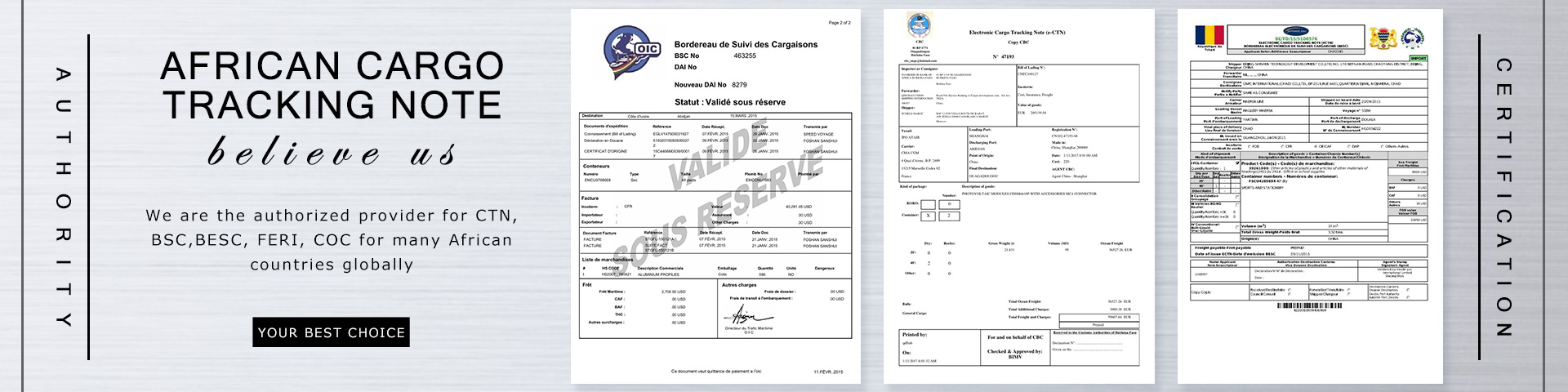
Guangzhou Aopai – Advantages in Kenya PVOC Inspection and Clearance:
We currently provide direct electronic cargo tracking note services to domestic traders for all exports to African countries. Leveraging our years of industry experience, we integrate and optimize destination port clearance requirements mandated by most African nations, offering professional, more cost-effective, and more convenient trade clearance services to domestic clients.
For clients whose goods have arrived at the port but cannot be cleared and urgently require Kenya PVOC inspection, contact us for certificate issuance!
Currently, we can handle Electronic Cargo Tracking Notes (ECTN) for the following African countries:
ECTN/CTN/BESC: Central African Republic, Guinea, Guinea-Bissau, Mali, Niger, Burundi, Chad, Benin, Togo, Cameroon, Republic of the Congo, Burkina Faso, Senegal, Libya, and other African nations.
BSC: Côte d'Ivoire, Madagascar
CNCA/ARCCLA: Angola
FERI: Democratic Republic of the Congo
BIC/BIETC: Gabon
ACD/ENS: Guinea, Sierra Leone, Nigeria, Madagascar
COC/PVOC: Kenya, Tanzania, Côte d'Ivoire, Gabon, Uganda, Ghana
Thanks & Best Regards!
* * * * * * * * * * * * * * * * * * * *
Guangzhou Aopai International Freight Forwarding Co., Ltd.
Speed voyage international trans co., limited
Sales Manager: Jacky Huang
Mobile: 0086-13711508094
WeChat ID: JACKY13711508094
QQ: 1093392878
Email: speedvoyage@163.com
Address: Room 609, Yidong Building, No. 301-303 Huangshi Zhong Road, Yuexiu District, Guangzhou, China. Postal Code: 510060
Address in Chinese: 广州市越秀区环市中路301-303号怡东大厦609房