






























"Focus" EVER GIVEN blocked the waterway, but couldn't stop the Suez Canal's cash flow from rolling in
Over the past year, the global shipping market has remained red-hot, with international port congestion, a severe shortage of containers, and continuously soaring freight rates. Shipping companies at the center of the storm have seen profits surge, and industry wages have risen accordingly.
Year-End Bonus Averaging 40 Times Monthly Salary
1
Recently, Evergreen Marine, the largest shipping company in the Taiwan region, distributed year-end bonuses to its employees. According to local media reports, the average bonus amount reached as high as 40 times the monthly salary.

Reports say many employees' first reaction upon seeing their accounts was: "Did I read that wrong? I've never seen so much money!" Take an employee with a monthly salary of NT$60,000 as an example — the year-end bonus received amounts to nearly NT$2.4 million, approximately RMB 550,000. Even regular specialists can receive a year-end bonus of NT$1.5 million, about RMB 350,000.
Riding the global shipping market boom, companies across the industry chain have been reaping enormous profits. On January 14, global shipping giant Maersk Group projected its actual profit for the previous year would reach USD 24 billion (approximately RMB 152.5 billion). COSCO SHIPPING Holdings posted a net profit of RMB 67.59 billion for the first three quarters of 2021, a staggering 1,651% year-on-year surge. CIMC Group reported a net profit of RMB 8.799 billion for the first three quarters of 2021,
A staggering 1,161% year-on-year surge.
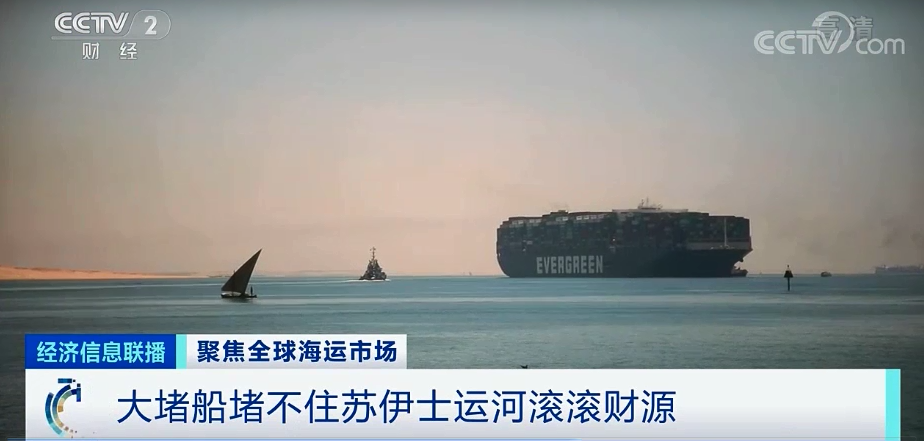
It’s far from just the shipping lines that are profiting. In 2021, despite facing challenges such as the "century’s mega blockage," pandemic resurgences, and staff shortages, the Suez Canal Authority’s annual revenue still shattered its historical record, reaching $6.3 billion (approximately RMB 40 billion), a year-on-year increase of 12.8%.
In fact, after the "Great Canal Blockage," canal trade has not been persistently affected. Traffic volume has risen rather than fallen, and relevant authorities are actively developing the waterway. Recently, the Suez Canal Authority has raised prices by 6% for 2022 to cope with the huge demand for shipping.
Data shows that the global shipping industry is expected to achieve a record profit in 2021, exceeding $150 billion (approximately RMB 952.9 billion). In 2020, this figure was only $25.4 billion (approximately RMB 161.4 billion), a nearly fivefold year-on-year surge.
2021 was a golden era for the global shipping industry, yet it may also have been the darkest year for many foreign trade enterprises. Skyrocketing freight rates and congested ports caused major headaches for these businesses.
Beyond freight costs, an even bigger headache is vessel congestion. Liang Liang, a Chinese importer and wholesaler based at the Port of Los Angeles, sources most of his goods—clothing and toys—from China. The daily fluctuating ocean freight rates leave him anxious every day.
Kang Shuchun, President of the International Freight Forwarders Association of the China Federation of Logistics & Purchasing: The situation of container shortages and sky-high freight rates is a huge drag on international trade, which will shrink the entire trade market, and may lead to a prolonged ice age in the future.