
















NEWS

HOME ꄲ NEWS ꄲ Where is the path to Africa's economic recovery in 2022

Where is the path to Africa's economic recovery in 2022

Published:2026-10-21 02:35
넶Views:8
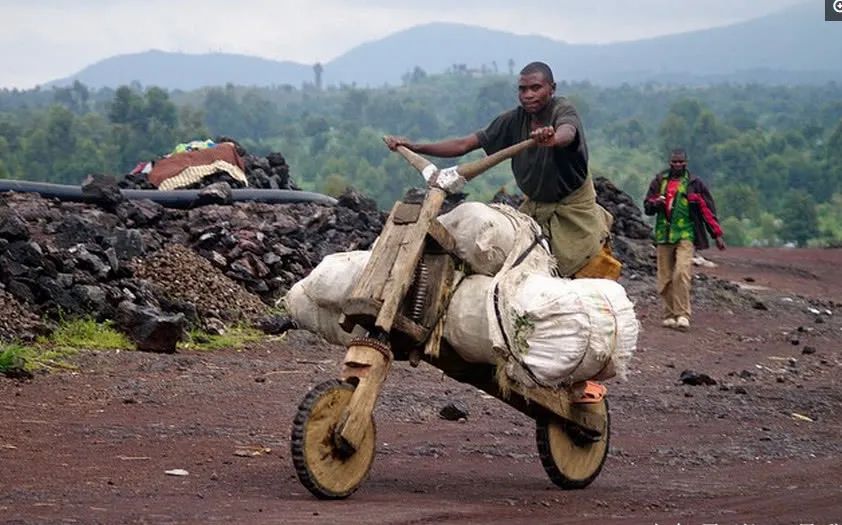
      In 2021, major economies experienced a strong rebound one after another, while Africa's road to recovery remained difficult and uneven. Looking ahead to 2022, challenges and hopes coexist.
      Africa's economic structure is fragile, and most countries have limited policy space. Against the backdrop of the "immunization gap," COVID-19 vaccination efforts in Africa face numerous difficulties, adding uncertainty to the economic outlook. Taking South Africa, the "locomotive" of African economic development, as an example, the South African Reserve Bank forecasts GDP growth of 5.2% for 2021, but only 1.7% for 2022.
      The International Monetary Fund (IMF) estimates that sub-Saharan Africa's economy will grow by 3.7% in 2021, a marked improvement from 2020, but the region's recovery pace is the slowest globally. It is worth noting that the growth divergence between Africa and other parts of the world is likely to persist for some time. Within the region, non-resource-intensive countries are growing much faster than resource-intensive ones, and the pandemic has further widened regional disparities. In 2022, sub-Saharan Africa's economic growth rate is expected to edge up to 3.8%.
      Affected by factors such as the pandemic and climate change, sub-Saharan Africa faces upward pressure on food prices, intensifying overall inflation risks in the region. The World Bank projects that the Consumer Price Index (CPI) in sub-Saharan Africa will rise by 4.3% year-on-year in 2021, up from 3.5% in 2020.
According to statistics, during the pandemic response in 2020, the average fiscal stimulus measures introduced by sub-Saharan African countries amounted to only 2.6% of GDP, significantly lower than the 7.2% ratio in advanced economies. After adopting accommodative monetary policies in 2020, African central banks saw their policy space shrink, and some have already tightened interest rates to address inflationary risks.
      Despite multiple pressures on the economic outlook, Africa is also showing positive trends such as a stronger consensus on economic integration, accelerated digital economy transformation, and more effective international cooperation.
      On January 1, 2021, the African Continental Free Trade Area (AfCFTA) officially launched. A World Bank report noted that if fully implemented, the AfCFTA could generate nearly USD 450 billion in real income gains for Africa by 2035.
      In June, the ECOWAS Convergence and Macroeconomic Stability Pact was adopted, setting 2022–2026 as the monetary convergence phase and targeting the launch of the single currency “ECO” in 2027. Achieving monetary unification in West Africa would greatly improve cross-border trade and investment, enhance resilience to external shocks, and support regional economic development.
      In October, Nigeria, Africa’s largest economy, officially launched its central bank digital currency, the eNaira, becoming the first African country to formally adopt a digital currency. A report jointly released by the International Finance Corporation (IFC), a member of the World Bank Group, and Google estimates that Africa’s internet economy could reach USD 180 billion by 2025, accounting for 5.2% of the continent’s GDP. A resilient internet economy is expected to drive Africa’s economic growth.
      In November, the Eighth Ministerial Conference of the Forum on China-Africa Cooperation (FOCAC) was held as scheduled and concluded with great success. Looking ahead, leveraging the momentum of the AfCFTA, FOCAC, and the Belt and Road Initiative, China-Africa economic and trade cooperation is expected to reach a new level.
      Looking ahead, Africa's economic growth still holds immense potential. In sub-Saharan Africa, over 90,000 new internet users are added daily; weekly exports total approximately US$6.5 billion, of which only one-fifth is intra-regional trade; and 20 million people enter the labor market each year. Commodity prices are expected to remain elevated, which may provide some support for the economic performance of resource-intensive African countries. Furthermore, the digital transformation of Africa's goods and services markets and supply chains is poised for further development.
      At the same time, the risks facing Africa's economy cannot be overlooked.First, slow vaccination rates and the risk of surging infections could continue to impact Africa's economy. The continent currently has the lowest overall vaccination rate globally, and successive waves of the pandemic along with containment measures may weaken the continuity of economic activity and investment prospects, with pandemic-induced economic losses likely to persist for some time.
      Second, Africa's economy is highly susceptible to changes in the external environment, and the current global economic outlook faces risks from rising inflation expectations and the spread of the pandemic. For some African countries, exchange rate pressures and debt issues may reach a minor peak.
Furthermore, political instability and security conditions remain significant factors constraining Africa’s economic outlook. The security situation in West Africa and the Sahel region remains fragile, Kenya will hold general elections in 2022, and there is a risk of armed conflict in northern Ethiopia — all of which are destabilizing factors affecting Africa’s economic and social development.

Source: Economic Information Daily, Africa Going Global

Please contact us for removal if any infringement exists.